

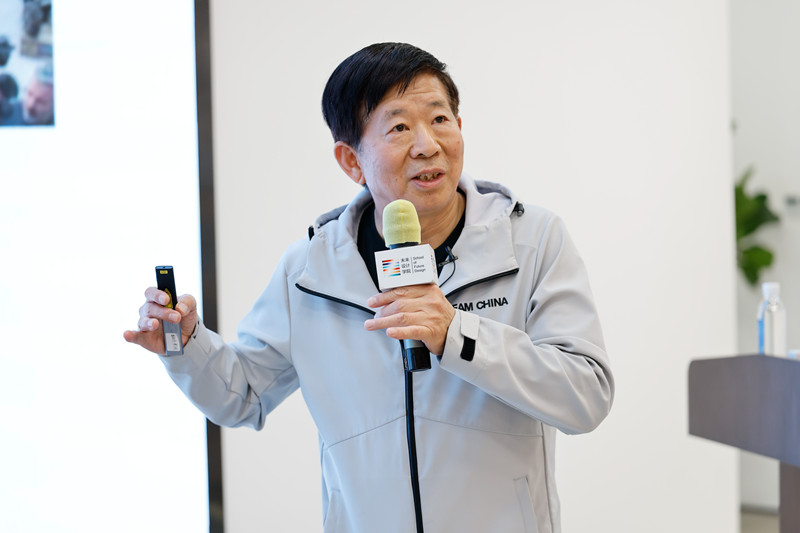
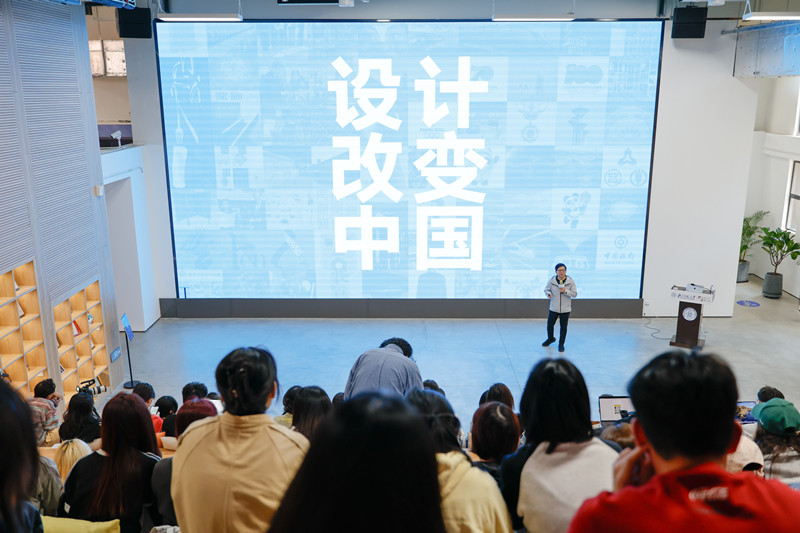
Zhuhai, March 22– Professor Wang Min, Distinguished Professor at BNU and former Dean of the Central Academy of Fine Arts (CAFA) School of Design, delivered an insightful lecture titled “Design Transforming China: 45 Years of Contemporary Chinese Design” at SFD The event traced China’s design evolution from post-reform learning to global leadership, emphasizing how design has become a driving force for cultural, technological, and economic progress.
A Journey from Learning to Leading
Professor Wang, a pivotal figure in China’s design education modernization, shared his personal journey—from studying at China Academy of Art and Yale University to witnessing seismic shifts from hand-drawn sketches to AI-driven creativity. He framed China’s design evolution through five themes: Aspiration, Exploration, Maturity, Clarity, and Momentum.
Over the past 45 years, Chinese design has evolved through five transformative phases:
1980s – Rapid Learning: Post-reform China embraced Bauhaus-inspired design education and Western methodologies, sparking debates between traditional craftsmanship and modern design. Industrial, graphic, and environmental design flourished as market reforms accelerated.
1990s – Expansion & Identity: Design expanded into branding and industrial fields, marked by milestones like the “Graphic Design in China” exhibition and Wang Xuan’s laser typesetting revolution. Brands like Haier drove demand for innovative design while creators sought a distinct Chinese identity.
2000s – Global Integration: Post-WTO accession, China blended global perspectives with local heritage. The 2008 Beijing Olympics, featuring jade-embedded medals and oracle bone-inspired visuals, symbolized cultural confidence, while brands like Lenovo gained international traction.
2008–2017 – Social Innovation: Design became a societal force, driving rural revitalization, Alipay’s fintech revolution, and high-speed rail’s global acclaim. Beijing Design Week attracted 8 million participants, showcasing tech-design fusion.
2018–Present – Tech-Cultural Leadership: Mega-projects like the Beijing Winter Olympics’ AI-powered mascot “Bing Dwen Dwen” and space station designs highlight China’s role as a global innovator. Rooted in cultural heritage and AI-driven creativity, Chinese design now leads in shaping sustainable futures.
Professor Wang underscored design’s role in reshaping lifestyles—from Alipay’s fintech revolution to high-speed rail’s global acclaim. Quoting John Maeda, he noted, “AI hasn’t replaced designers, but it has redefined design itself.”
Over 45 years, Chinese design evolved from Western imitation to cultural confidence and original innovation. Professor Wang stressed the need to redesign educational frameworks, institutional structures, and cultural narratives, positioning design as a catalyst for global progress. Amid AI integration, human-centered creativity and imagination will define the future of design.
SFD’s Vision: Educating Global Design Leaders
In closing, Professor Gao Peng, Dean of SFD concluded that Professor Wang Min is a pioneer in bringing Chinese design in line with international standards. During his tenure as the dean of the School of Design at the Central Academy of Fine Arts, Professor Wang introduced Adobe's technological revolution to students, reshaping the industry standards from manual typesetting to digital design. From the visual narrative of Beijing's bid for the Olympics to the design management of large-scale projects, he set an example of "how to use design to make the world understand China". He sent students to top universities such as the University of the Arts London and Stanford University, practicing the idea that "education is to open a window for young people - first to see the world, and then to let the world see us", which is the origin of the international gene of the SFD. The SFD will continue to build a bridge between academia and practice, helping students respond to the propositions of the times with design and contributing Chinese design wisdom to the world.