

From 22 to 28 June 2026, SFD successfully held the Second BNU International Summer School — Design and Innovation Leadership. This year’s Summer School reached a new high in scale, attracting 19 participants from a range of disciplinary backgrounds across 10 countries, including the United Kingdom, Finland, Montenegro, Saudi Arabia and South Korea. Participants included current undergraduate and postgraduate students, as well as outstanding young professionals with extensive experience in fields such as design and education.
Under the theme “Designing the Future, Leading Innovation”, the Summer School combined a variety of activities, including academic lectures, specialist workshops, urban cultural experiences and company visits. It aimed to provide a platform for cross-cultural exchange among young people with different academic backgrounds and cultural perspectives, while developing participants’ innovative thinking and leadership skills.
At the opening ceremony, Gao Peng, Dean of SFD, delivered a welcome address and extended a warm welcome to participants who had travelled from afar. Following the ceremony, participants visited the art museum with Zhou Tiange, and toured the campus with guidance from student volunteers. In a relaxed and enjoyable atmosphere, they familiarised themselves with the campus environment and began this much-anticipated summer journey.
In-depth Courses
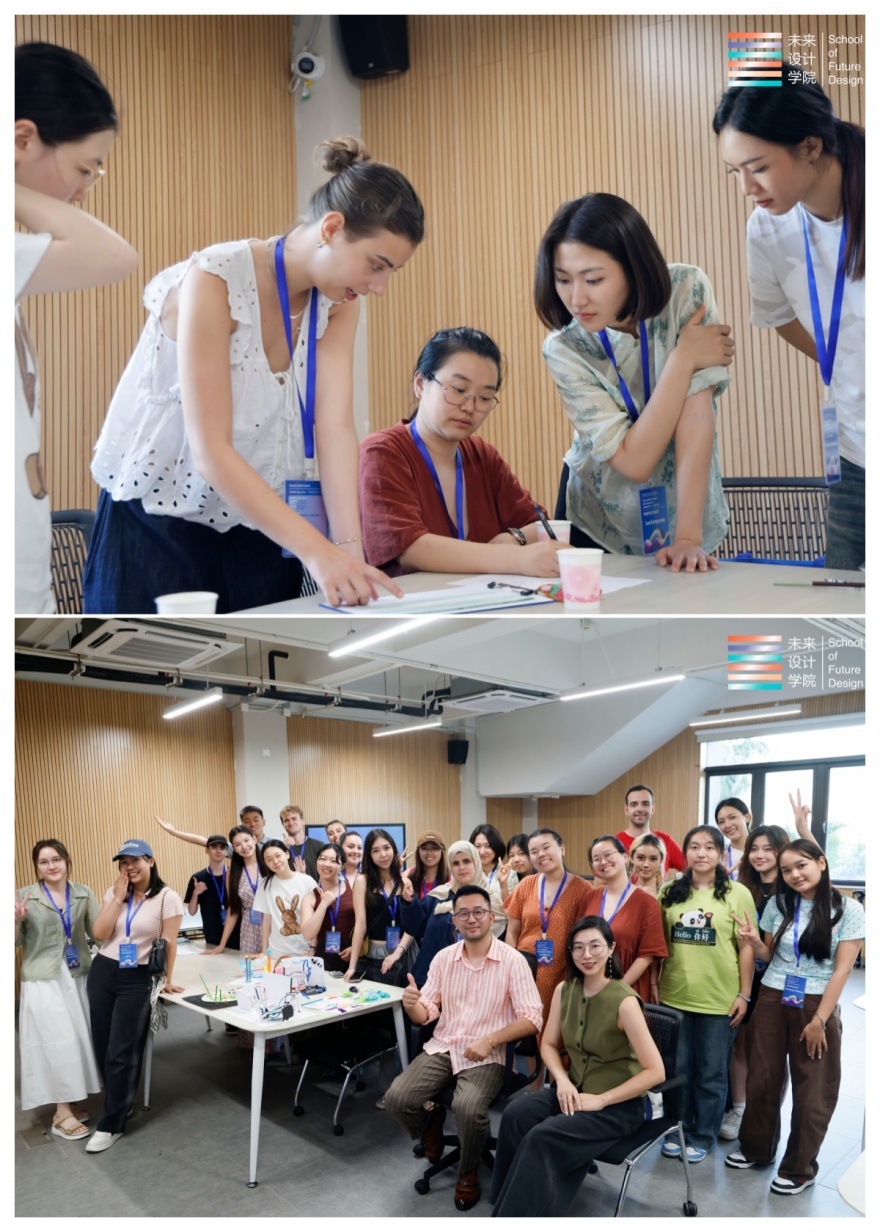
Dean Gao Peng delivered a course on spatial perception and artistic experience, bringing together four dimensions: performance art, interpersonal communication, urban spatial theory and multisensory practice. During the theoretical component, he introduced Kevin Lynch’s theory of the image of the city and organised an activity in which participants created hand-drawn image maps based on the physical environment of the campus. During the multisensory practice session, participants created sensory maps and took part in a four-person blindfolded walking activity. By engaging all five senses to explore the campus, participants developed their creativity, critical thinking and systematic spatial awareness.
Tony Brown, Distinguished Professor at Beijing Normal University, delivered a three-dimensional creative workshop entitled “Gravity”, guiding participants in post-digital artistic reflection around three key themes: gravity, balance and equilibrium. During the workshop, he shared interdisciplinary works including 3D-printed installations and digital animations, analysed trends in the integration of design and art, and explained the dual significance of gravity as both a physical law and a spiritual metaphor.
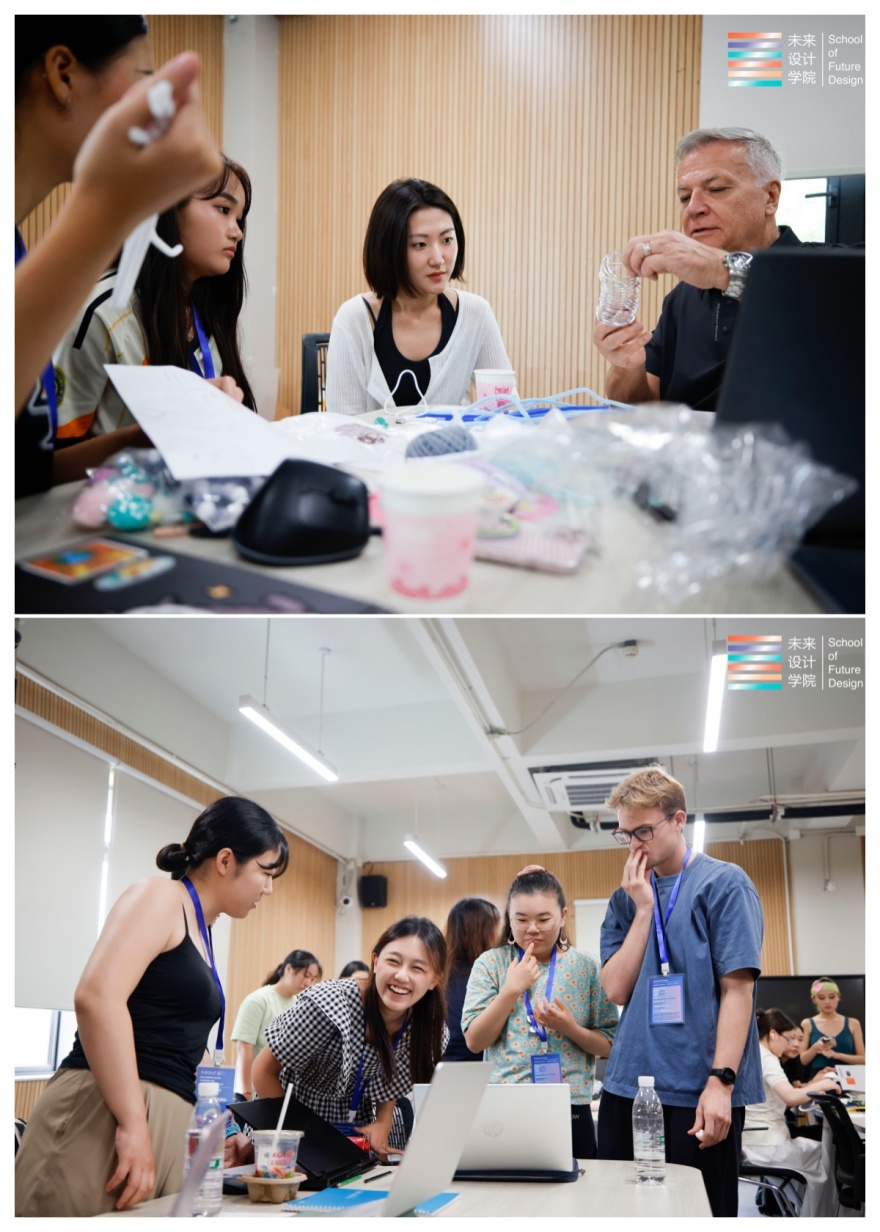
Liu An delivered a practical workshop on intangible cultural heritage water marbling. The course outlined the historical development and production processes of water marbling, compared the aesthetic differences between traditional patterns and contemporary design, and explained innovative approaches to combining intangible cultural heritage craftsmanship with digital technologies.
Marco Bidin, Associate Professor at Xinghai Conservatory of Music, and Zhou Tiange, Associate Professor at SFD, jointly delivered a course entitled “Media, Music and Technology”. They introduced the basic operation of the audio programming software Max 8, taught methods for identifying and analysing audio materials, and used live demonstrations to clearly illustrate the auditory differences produced by adjustments to different parameters.
Practical Visits
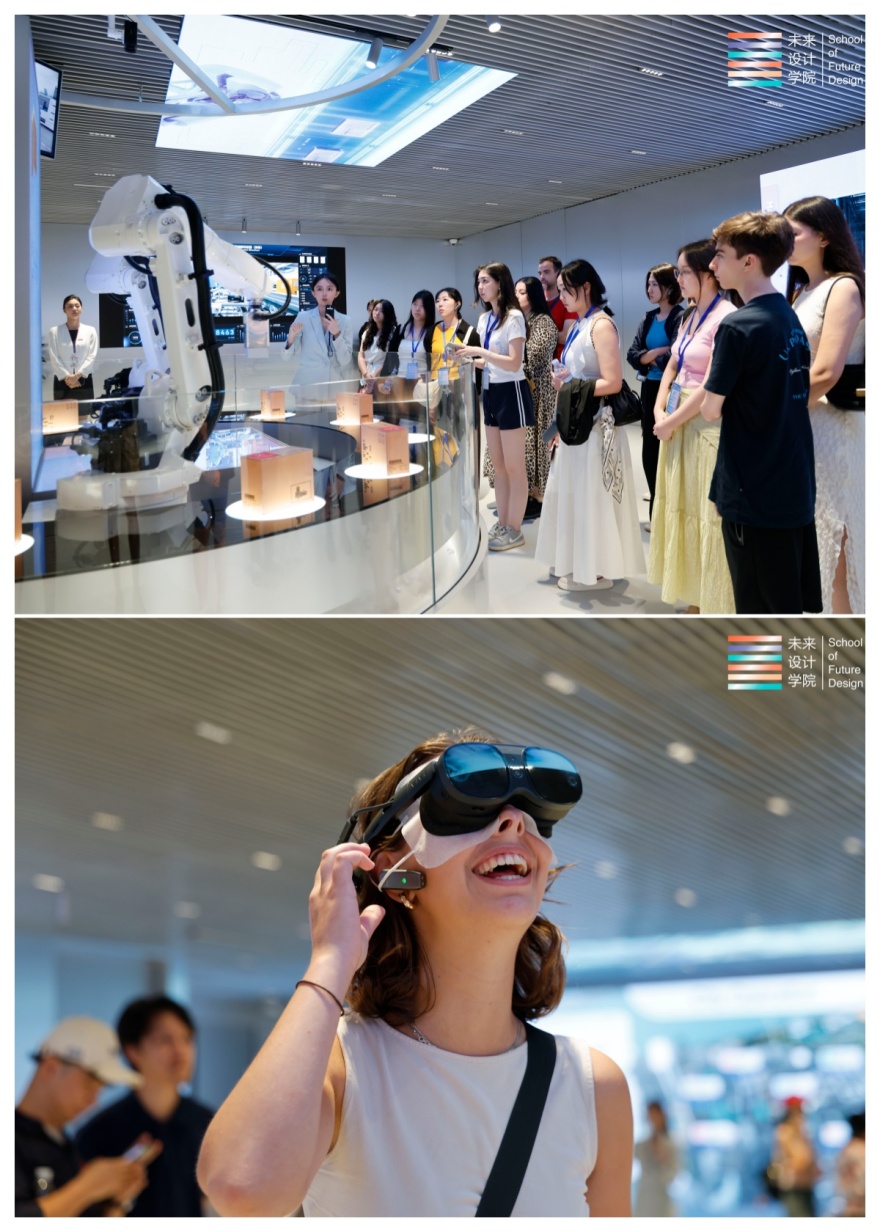
In Shenzhen, participants visited the Lenovo Future Centre and BYD Global Headquarters, extending the design classroom into the heart of industry. At the Lenovo Future Centre, participants took part in a study visit centred on “AI + Lenovo”, exploring applications of AI in areas including offices, education and sport, and discussing the innovative potential of interaction design. At BYD Global Headquarters, participants focused on the research and development of new energy vehicles and the company’s global industrial strategy. They observed the SkyShuttle system designed for different transport scenarios and fully automated production models, learnt about the process of translating design into mass production, and discussed approaches to implementing product design based on low-carbon ecological principles.
In Guangzhou, participants visited a number of major urban landmarks in sequence. They viewed the distinctive Lingnan arcade architecture, sampled Cantonese dim sum, and experienced the vibrant everyday culture of Lingnan. In the historic district of Yongqing Fang, they visited Bruce Lee’s former residence and explored the architectural wisdom of traditional Xiguan residences, including grey-brick walls, tanglong doors and Manchurian windows. They then visited the Guangzhou Museum of Art, where they viewed traditional Chinese calligraphy and painting as well as masterpieces of the Lingnan School of Painting. In the evening, they arrived at Canton Tower, where they viewed at close range the structural aesthetics of the landmark known as the “slender waist”, and experienced a different kind of design appeal under the night-time illumination.
During the visit to Zhuhai, participants explored the value of design in the integration of technological innovation and urban culture. At the Hengqin Traditional Chinese Medicine Culture Experience Centre, participants traced the development of traditional Chinese medicine through digital exhibitions and considered how design can connect traditional culture with contemporary life. At the Zhuhai Opera House, they viewed this urban landmark, which combines artistic aesthetics with engineering ingenuity, and reflected on the principle of harmonious coexistence between architecture and nature. Finally, they visited Beishan Courtyard, where they explored local cultural heritage through historic alleyway architecture and distinctive local businesses. They learnt from approaches to revitalising traditional community design and discussed ways in which cultural preservation and innovative development can work together.
Closing Ceremony
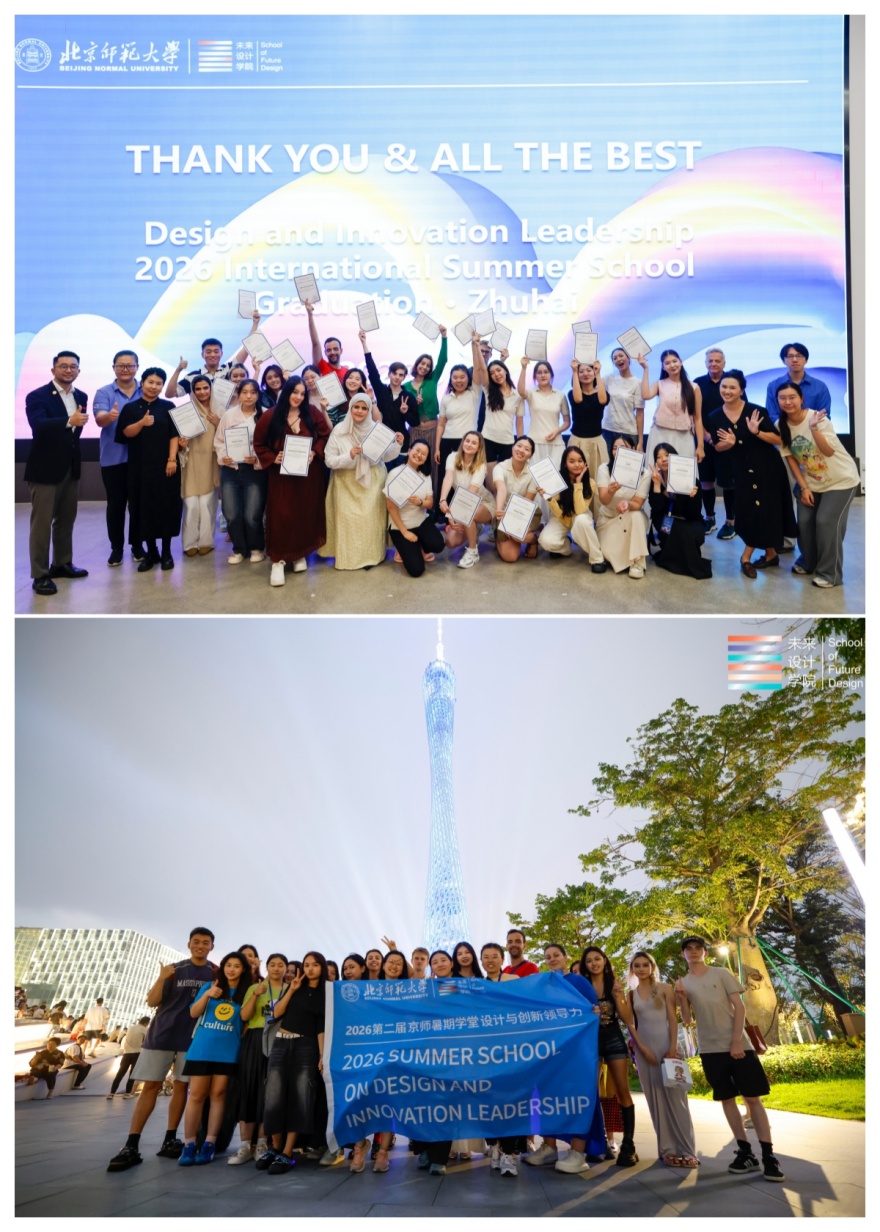
On 28 June, the closing ceremony of the 2026 International Summer School — Design and Innovation Leadership opened with a retrospective video. Working in groups, participants presented their final projects around the theme of “Design and Innovation Leadership”. The projects presented by each group adopted different perspectives and diverse formats, fully demonstrating the innovative vision and practical capabilities developed through interdisciplinary and cross-cultural engagement. The atmosphere at the event was lively and enthusiastic.