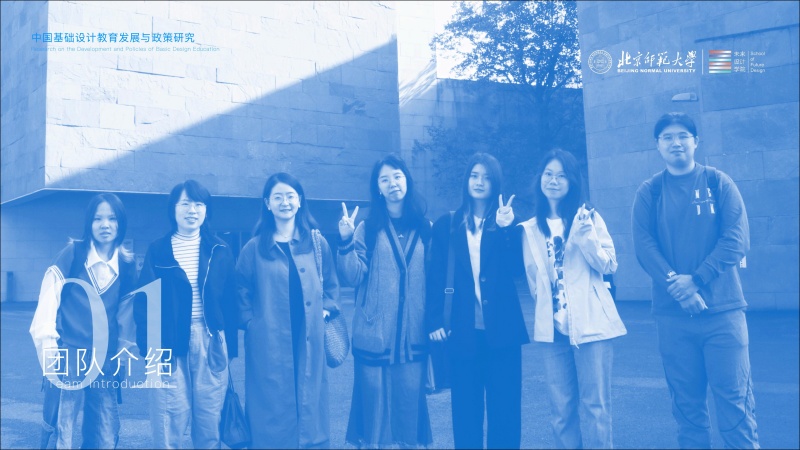
With the continuous deepening of reforms in the educational system in the new era, quality education, aesthetic education, and innovation education have been elevated to the level of national strategy. In recent years, a number of programmatic policy documents have been successively issued, all explicitly emphasizing the cultivation of students’ comprehensive qualities and innovative capabilities. However, despite the rapid development of the policy system, design education, a key field related to aesthetic literacy, creativity and ways of thinking, has long remained relatively implicit within basic education, and its development has yet to be systematically articulated.
Against this background, SFD initiated the PBL project “Research on the Development and Policy of Basic Design Education in China”, seeking to delineate a clearer picture of basic design education in China from macro-level policy to micro-level practice. Taking basic education policies from 1980 to 2024 as its principal line of enquiry, the team employed methods including policy text analysis, case-based investigation, and interviews with experts to examine the evolving roles, developmental logic, and contextual demands of design education across different historical periods, with the aim of providing theoretical support and practical insights for the future institutional development and curricular innovation of basic design education.
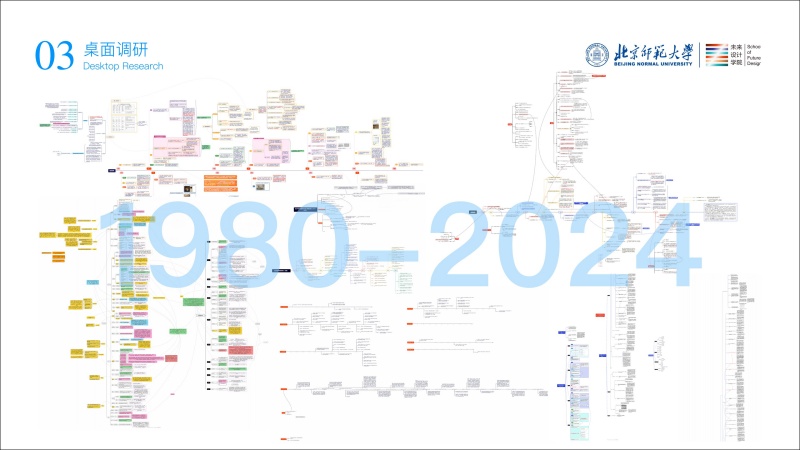
After nearly one year of work, the team ultimately completed research outputs exceeding 90,000 words, including the Report on the Development Policy of Basic Design Education in China, and Casebook on the Development of Basic Design Education in China, and two thematic academic papers. These outcomes construct a relatively comprehensive research framework across multiple dimensions, including macro-level policy, regional disparities, curriculum practice, and theoretical analysis.
Over the course of the year-long PBL project, the team experienced the full process from organising initial uncertainties to forming coherent arguments, and from unfamiliarity with methodologies to the maturation of analytical frameworks. Under the guidance of their supervisors, they completed a series of tasks, including organising extensive and complex policy texts, classifying and synthesising key terms, constructing indicator systems, and drafting reports and academic papers. This process not only enabled members to appreciate the rigour of policy research, but also fostered a clear macro-level understanding of the necessity of developing design education, while further recognising that the implementation of design education practice at the stage of basic education remains a challenging and protracted endeavour.